
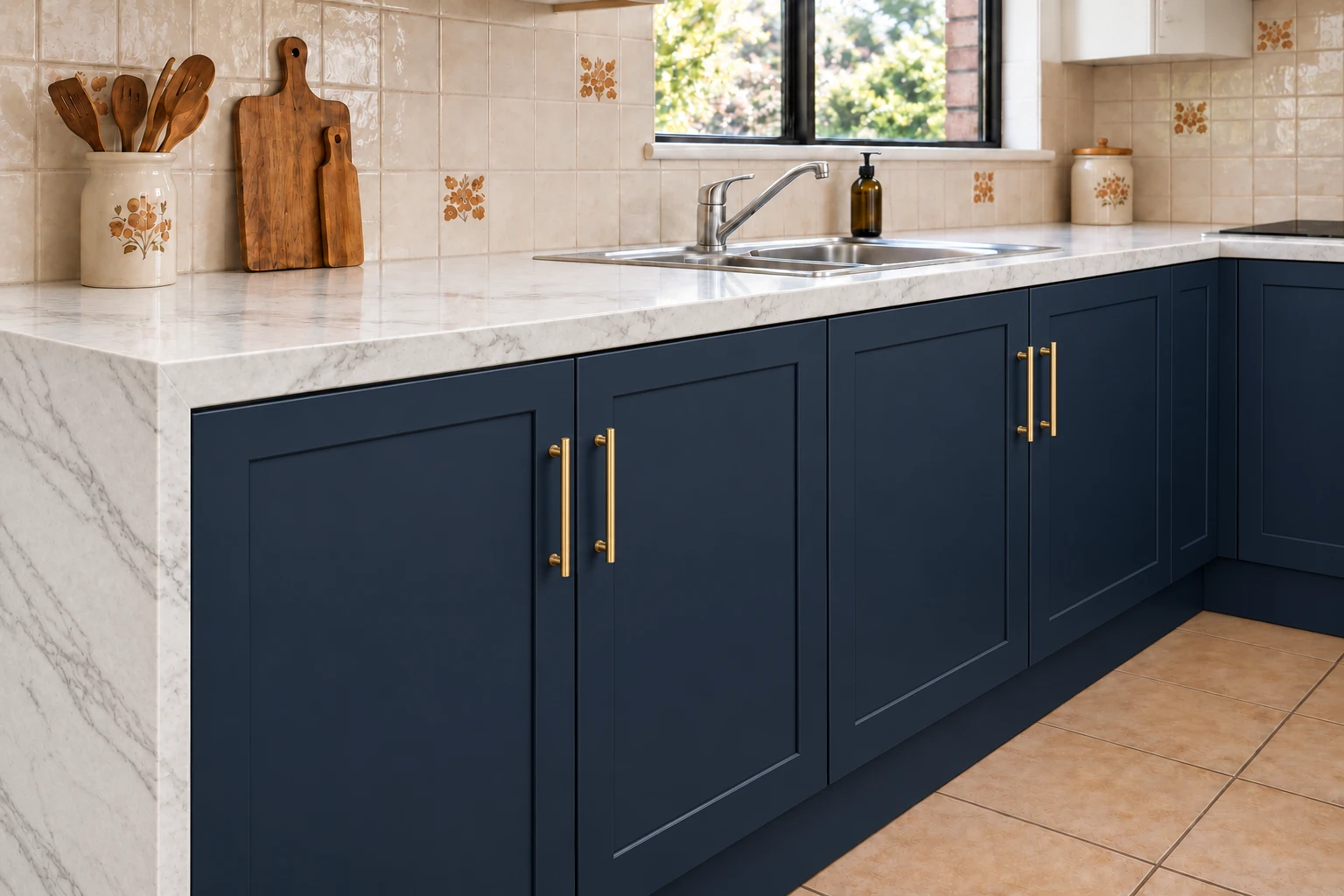
A kitchen makeover is worth considering when the layout works and the cabinet structure is suitable to retain. A full renovation becomes more relevant when you need a different arrangement or substantial replacement. The best starting point is the problem you need to solve, rather than how dramatic you want the before-and-after to look.
Both paths can change the appearance of a kitchen. They differ in how much existing structure they retain and what changes they can achieve. This guide helps you write a clear brief before requesting proposals.
Separate appearance problems from daily-use problems
Make two short lists. On the first, put visual frustrations: dated door colour, a tired benchtop, mismatched handles or a door style you no longer like. On the second, put problems you experience while cooking, unpacking groceries and cleaning up.
The second list might include a dishwasher that blocks your usual route when open, a lack of preparation space where you need it, or cupboards that do not accommodate what you store. These are prompts for a design discussion, not proof that the whole kitchen must go.
Kaboodle’s kitchen planning guidance recommends considering goals, layout, appliances and storage as part of the plan. Use that principle to distinguish a finishes brief from a layout brief. Choosing a colour scheme first can leave the daily-use questions unresolved.
When retaining the kitchen makes sense to explore
Consider a retained-carcass makeover if you would be happy to keep the kitchen’s arrangement and the main frustrations are the surfaces you see and touch. Kitchen Revival’s service retains suitable cabinetry and updates doors and drawer fronts, handles and an assessed stone benchtop overlay.
Here is a hypothetical brief: “The sink, fridge and cooking area are in the right places. There is enough storage, but the timber fronts and laminate benchtop date the room.” That is a useful starting point for a makeover assessment. It does not establish that the cabinets or benchtop are sound; they still need checking.
Refacing is not a way to conceal underlying problems. If you have noticed deterioration, movement or moisture damage, flag it before finishes are selected. Our cabinet suitability guide covers observations to bring to the assessment without asking you to diagnose the structure yourself.
When a larger redesign deserves consideration
A full renovation may be the better discussion when your brief depends on moving major elements, replacing unsuitable cabinets or rethinking the storage arrangement. Changing the fronts cannot, by itself, provide a new floor plan.
For example, “I want the sink on a new island and tall storage where the current cooking area sits” is a different project from updating existing finishes. Tell potential providers about those goals at the outset, even if you are still deciding. Otherwise, a detailed finishes quote may address only part of what you actually want.
There can also be a mixed brief: most of the kitchen works, but one area does not. Ask whether the proposed work can address that area and what remains outside the provider’s scope. Do not assume Kitchen Revival offers cabinet reconfiguration, building work or full replacement; its confirmed offer is the retained-cabinet makeover described above.
Compare outcomes before comparing quotes
Write a short description of the result you expect, then check each proposal against it. A useful comparison records:
- What remains: cabinet boxes, drawer boxes, layout, existing benchtop and appliances, as applicable.
- What changes: the exact fronts, surfaces, handles and other components included.
- What stays unresolved: any layout, storage or condition issue outside the proposal.
- Who coordinates the work: the named contact and responsibility for any separate trades.
- What is excluded: removal, disposal, associated finishes or other work that needs a separate allowance.
A more extensive proposal is not automatically better, and a smaller proposal is not automatically enough. Judge both against the brief. See our cost-factor guide for the details that make scope comparisons useful.
Plan for kitchen access as well as appearance
Kitchen Revival prepares new fronts before installation, so you can continue using the kitchen while they are being made. That should not be read as a promise that everything remains usable throughout installation.
Ask which parts of the kitchen you will be able to use at each stage, when cupboards need clearing and whether any appliance or service will be unavailable. Request project-specific dates and access arrangements once the scope is assessed. Neither “makeover” nor “renovation” gives you a reliable universal duration.
A practical household plan identifies where you will prepare simple meals, keep everyday items and direct children or pets while work is happening. Coordinate that plan with the team’s instructions rather than assuming the kitchen will operate normally around them.
A simple brief to send with your enquiry
Before choosing between the two paths, finish these four sentences:
- “The parts of my kitchen that work well are…”
- “The appearance changes I want are…”
- “The daily-use problems I need solved are…”
- “The existing damage or uncertainties I have noticed are…”
Include your suburb and a wide kitchen photo if the team requests one. If your brief mostly concerns surfaces and the existing arrangement works, explore whether your kitchen is right for a revival. If it depends on substantial layout change, discuss that honestly before committing to new fronts.
Still unsure what providers mean by refacing, painting or resurfacing? Our guide to the different methods explains the physical work behind those labels.
Written with AI assistance for Kitchen Revival’s homeowner guides. General planning information; your kitchen and the proposed products need individual assessment. No supplier relationship is implied by the references above.
Your kitchen. Its next chapter.
Tell us what works and what you’d love to change.
Explore your kitchen revival